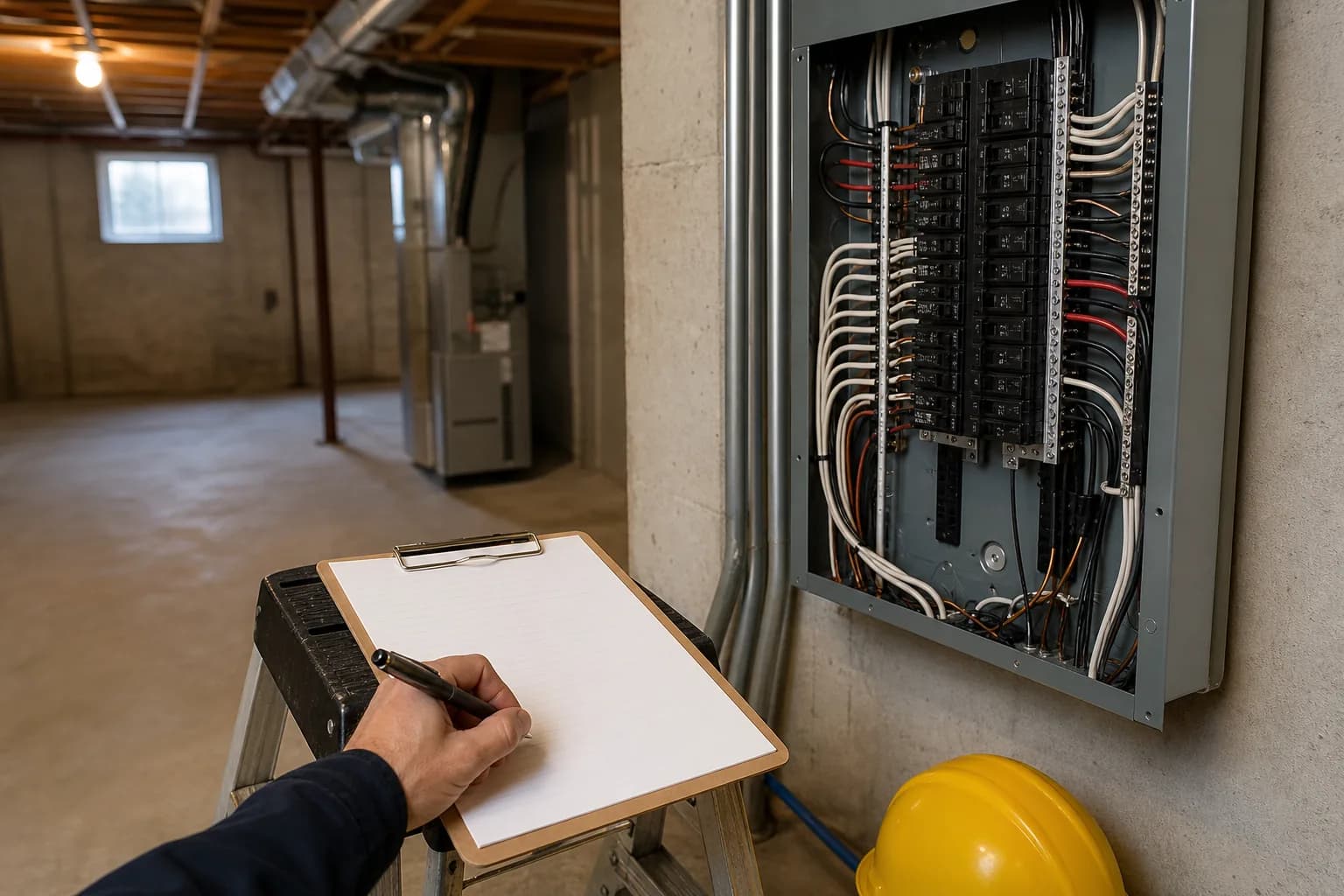
In Ontario, almost all electrical work has to be reported to the Electrical Safety Authority (ESA). ESA calls this a notification of work; most people call it an ESA permit. Either way, it is how a job gets on ESA’s books, gets reviewed, and ends with a certificate showing it meets the Ontario Electrical Safety Code (OESC). Here is how the system works for homeowners, landlords and facility managers, and what to ask for when the job is done.
What ESA does
ESA is the province’s electrical safety regulator. It licenses electrical contracting businesses, takes notifications of work, inspects installations and enforces the OESC. It is a not-for-profit and funds itself from fees, which vary with the type of work and are published in ESA’s fee guides.
A building permit from your municipality is a different thing. ESA is clear that a building permit does not replace an electrical notification, and some renovations need both.
Who files the notification
The person doing the electrical work files it. If you hire someone, ESA says it must be a Licensed Electrical Contractor (LEC), and the LEC files the notification for the job. A notification can’t be filed on someone else’s behalf, so a contractor who asks you to take out the permit yourself is asking you to tell ESA you did their work. Treat that as a red flag.
Timing matters. ESA says the notification is filed before work starts, even for small jobs. The work must then be inspected before it is concealed or buried, which means before insulation, vapour barrier or drywall goes over the wiring.
Homeowner permits
Ontario lets homeowners do electrical work in their own home, on one condition: you file the notification yourself and have the work reviewed by ESA when it is complete. The permission is personal. ESA says friends, family members and neighbours cannot do electrical work in your home. If someone else does it, that someone has to be an LEC.
Homeowners can file by downloading ESA’s notification form or by calling the ESA Customer Service Centre at 1-877-ESA-SAFE (372-7233). There is a narrow exemption: an owner living in their own single-family home may not need a notification to replace certain light fixtures and switches. ESA suggests calling to confirm before you rely on it.
Doing it yourself saves labour, not paperwork. Every installation, repair and replacement still has to meet the OESC.
What an inspection checks
ESA sorts home work into New Residential, for a structure getting a wiring system for the first time, and Renovation Residential, for any change to existing wiring, including repairs and replacing devices. A job may be inspected at one or more stages:
- Trench: underground wiring, before it is buried.
- Service: the wiring to the meter, the main disconnect and the grounding. ESA says a service upgrade, relocation or replacement must be inspected before the utility restores power.
- Rough-in: once the branch-circuit wiring and boxes are in, before anything is covered. ESA’s checklist includes cables strapped and supported, boxes securely fastened, bonding connections, finished splices, and protection plates where nails or screws could reach a cable.
- Final: as soon as possible after the work is finished. The inspector looks at devices, cover plates and fixtures, the panel directory and labels, filled openings in panels and boxes, GFCI and AFCI protection, receptacle ratings, clearances in front of equipment, grounding and bonding, and correctly sized overcurrent protection.
Not every notification brings an inspector to the door. ESA determines which installations to inspect and may accept some without a visit. Complicated jobs can need several visits. If work doesn’t comply, the inspector issues a defect notice listing the corrections, and the work has to be fixed before ESA will accept it.
The certificate at the end
When the work passes, ESA issues a Certificate of Acceptance. People often call it a certificate of inspection; it is the document that proves the work meets the OESC. ESA issues it to the person who filed the notification, which on a contracted job is the contractor, so ask for a copy and keep it with your house papers or building records.
Lost one? Ask the contractor first. If that fails, ESA has an Access to Information form you can send to RFI@electricalsafety.on.ca.
Why insurers and buyers ask for it
ESA describes the certificate as important for insurance and resale. It also warns that if an insurance claim links to work by an unlicensed electrician, the claim may be denied. That is why an insurer may want to see the certificate after a panel replacement or a rewire.
For buyers, an open notification is the bigger risk. ESA’s guidance for real estate agents says an open notification automatically transfers responsibility for any electrical defects to the new owner. ESA can run a search of records showing open notifications on a property since 2000, and suggests making a sale conditional on ESA confirming that recent renovation notifications were closed. If you are selling a renovated home, close your files before you list.
How to check a contractor’s licence
- Ask for the ECRA/ESA licence number. ESA says it should be on the contractor’s truck, business card and estimate.
- Look it up on ESA’s Contractor Locator Tool. You can search by contractor or by location and filter by type of work, such as residential.
- Check the status. The tool filters by valid, expired, suspended and revoked licences, and flags contractors with a penalty or conviction.
- Make sure the business named on your quote is the business holding the licence.
You can also call 1-877-ESA-SAFE and ask. ESA’s own warning signs include a licence number you can’t verify, being told a referral or a general contractor’s say-so is enough, a plan to skip the notification on a “simple” job like pot lights, and a price far below everyone else’s.
Businesses and public buildings
The same system covers commercial, industrial and institutional work. A tenant fit-up, a lighting retrofit or a machine move each needs its notification, and complicated installations may be inspected at several stages. Facility managers should keep each Certificate of Acceptance with the building records, where insurers and future buyers can see it.
How we handle it
On every job that needs one, we file the ESA notification, book the inspections and pass the Certificate of Acceptance on to you once ESA accepts the work. Planning a project, or unsure about a permit on past work? Request a free quote or call 519-591-1442.
Questions people ask
Do I need an ESA permit to replace a light fixture?
Possibly not. ESA says an owner living in their own single-family home may not need a notification to replace certain light fixtures and switches. Almost all other electrical work needs one, so call ESA at 1-877-372-7233 to confirm before relying on the exemption.
Can a friend do my electrical work if I take out the permit?
No. Ontario allows homeowners to do electrical work in their own home with their own notification, but ESA says friends, family members and neighbours cannot do electrical work in your home. Anyone else you have do the work must be a Licensed Electrical Contractor, who files their own notification.
Who gets the ESA Certificate of Acceptance?
ESA issues it to the person who filed the notification. On a job done by a licensed contractor, that is the contractor, so ask them for a copy. If you can't get one, ESA accepts Access to Information requests at RFI@electricalsafety.on.ca.
How can I tell if a house I'm buying has open ESA permits?
Ask ESA for a search of records, which shows open notifications on the property since 2000. An open notification passes responsibility for any electrical defects to the new owner, so ESA suggests making the sale conditional on confirmation that recent renovation notifications were closed.
Is an ESA permit the same as a building permit?
No. An ESA notification covers the electrical work and is filed with the Electrical Safety Authority. A building permit comes from your municipality. ESA says one does not replace the other, and some renovations need both.
How do I check if an electrical contractor is licensed in Ontario?
Ask for their ECRA/ESA licence number and look it up on ESA's Contractor Locator Tool at licensing.esasafe.com, or call 1-877-ESA-SAFE. The tool shows whether the licence is valid, expired or suspended, and flags penalties and convictions.
What happens if electrical work fails an ESA inspection?
The inspector issues a defect notice that lists the corrections needed. The work has to be fixed and accepted before ESA issues a Certificate of Acceptance, and on a service job before the utility restores power.
Sources
- ESA: Notifications and inspections, what you need to know
- ESA: How do I notify ESA about electrical work?
- ESA: Do-it-yourself electrical work
- ESA: I'm a homeowner. What type of inspection do I need?
- ESA: Prepare for your inspection, rough-in
- ESA: Prepare for your inspection, final
- ESA: Obtain a Certificate of Acceptance
- ESA: Information for real estate agents
- ESA: Hire a Licensed Electrical Contractor
- ESA Contractor Locator Tool
- ESA: Fees